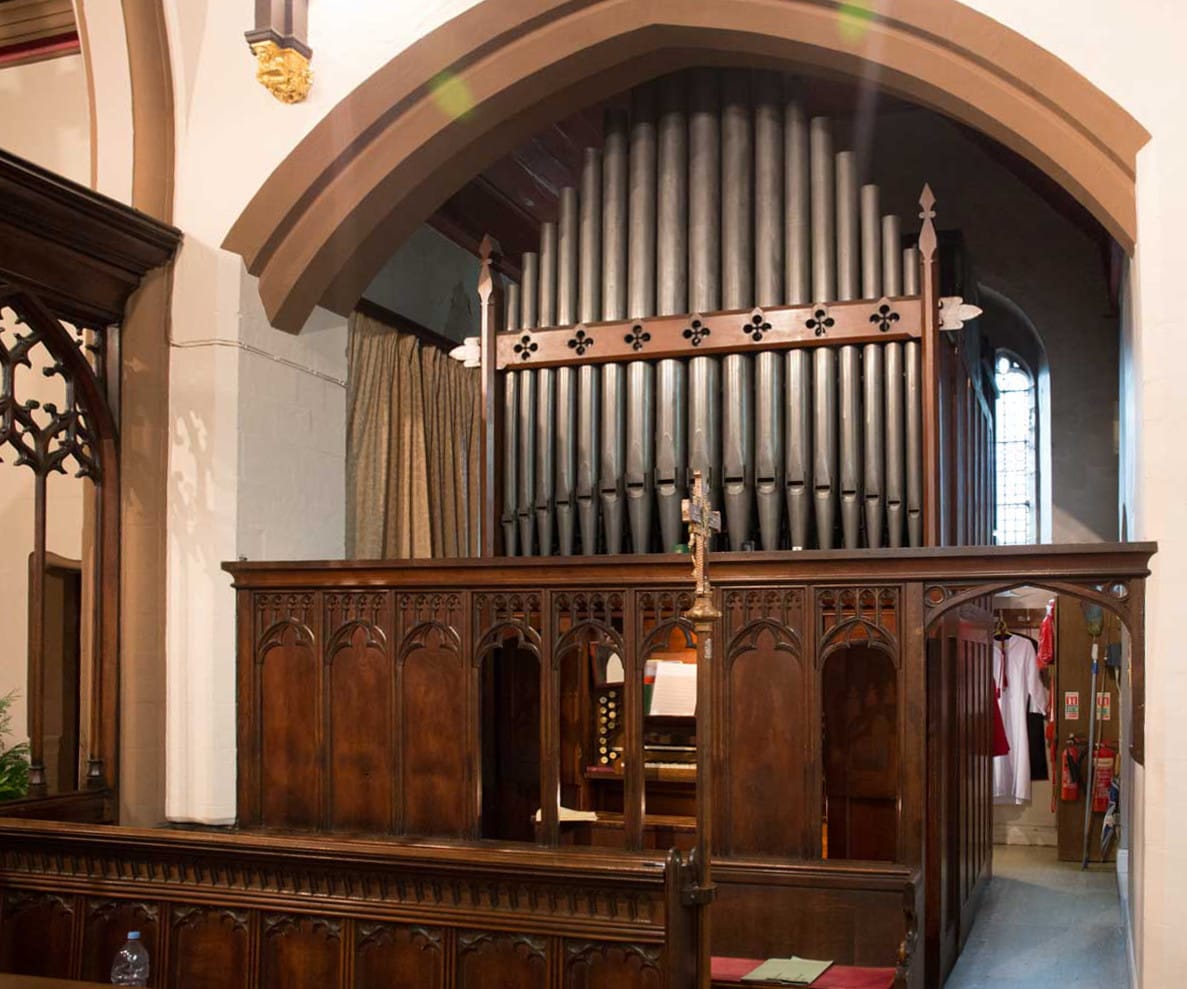
The traditional Anglo-Catholic music of St. Martin’s is provided by the church’s dedicated choir combined with the sounds of its noble Father Willis organ.
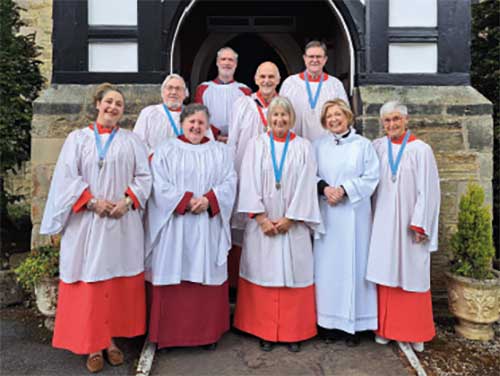
St. Martin's Choir
St. Martin’s Church has been deeply connected with the Anglo-Catholic tradition in music since its earliest days. The rich quality and variety of music, both played and sung, is an integral part of church life. The Anglo-Catholic tradition is especially reflected in the monthly Choral Evensong, but expect to see the robed choir at most services. Organist Alan Thornecroft leads the choir at St. Martin’s. His musical selections mean there is always a new challenge to be mastered by the choir before the piece’s incorporation into a choral service.
For anyone interested in joining the choir at St. Martin’s, new members of any voice range are welcome, and the best way to find out more would be to come to a church service and speak with organist Alan Thorencroft or any other choir member. Prospective members would have to audition before joining, and rehearsals are on Fridays at 7.15 pm and before services.
St. Martin's Choir - In the News
St. Martin's - the sound of music
Marple Review, Summer 2026
With five hymns, sung prayers, a sung psalm, an extra sung piece during communion and an applause-rousing recessional played at the end of every Sunday service, it is obvious to even a casual passerby that music is an important part of St. Martin’s Church on Brabyns Brow.
Organ
The organ at St. Martin's was made by Henry Willis and Sons Ltd, one of the oldest and most famous of English organ builders. There were four generations of Henry Willis'. The first (1821-1901) is known as "Father Willis" and our organ dates from his time in control. Willis achieved public notice with a big organ which he displayed at the Great Exhibition in London in 1851. He went on to create more "monster" organs, notably at St George's Hall, Liverpool (1854-5), the Royal Albert Hall (1871) and St Paul's Cathedral (1872).
Willis also produced organs for smaller churches. An advocate for these was the Rev John Baron, rector of Upton Scudamore, Wiltshire, who published a book which included designs for small organ cases (with only two or three ranks of pipes) by the distinguished architect, G.E.Street. The Willis firm produced more than two hundred "Scudamore" organs. St. Martin's organ is bigger than a Scudamore, but well adjusted to the size of the church, and most of the organ repertoire up to the late 19th century can be comfortably played on it.
Our organ was completed by Willis in time for the opening of the church in 1870. At that time it consisted of just ten stops, with one pedal stop and only 25 pedals. In 1898 Keates of Sheffield added three stops to the Swell and a hydraulic blowing engine powered by mains water pressure. Henry Willis and Sons renovated the organ in 1911, fitting a full 30 note pedalboard and extending the Pedal Bourdon to allow for a Bass Flute 8'. They returned in 1939 to fit an electric blower.
A complete restoration of the organ was carried out by Wood of Huddersfield in 1992 when a Fifteenth was added to the Swell.
Church Organ Gallery